Friday, June 15, 2012

Ramps in early spring woods - abundant, vulnerable


We had a fabulous crop of ramps in the woods early this spring. One day Peggy and I really got into it, and gathered about 2 pounds (in a half hour). The ramps have a VERY delicate, yet full onion-shallot flavor. She carried this treasure away to her apartment, and ate ramp-flavored everything for several days.

The white below-ground bulb has a lot more flavor than the green leaves that show above-ground. Many folks are worried about over-harvesting so they leave the bulbs in the ground and just take the leaves – and then probably wonder what’s so special about ramps!

We dug with a trowel or shovel to fully remove several plants, in scattered areas around a ramp bed. New plants will spread to fill in the small gaps left by the digging. But you do need to be careful because the growing areas are fragile, usually an uneven woodland surface with little or no soil, covered in rocks and roots amongst which the ramps flourish. If you are really concerned about over-harvesting, after cleaning the ramps you can carry the remnants of the roots back out to the woods and bury them for re-growth.

Someone not acclimated to these careful harvest practices can easily damage woodland ramp beds. I was contacted by a restaurant person who said he’d like to come by with a shovel and dig ramps out of my woods.

At first I thought that would be ok, if I went along, but my new Primitive Pursuits friends said, “Never let anyone else do the harvesting or they’ll ruin it.” They meant that the well-meaning ramp hunter could crush the ramps, rip up and trample the beds, and make a giant mess with a shovel, without even realizing it.

So I offered to harvest and deliver a certain amount of ramps, but the contact never finalized – probably just as well! Maybe next year, with the accent on maybe.

Sunday, April 1, 2012

Wonderful learning


http://www.ccetompkins.org/4h/primitive-pursuits

Last Friday the Primitive Pursuits training session was uphill off Coddington Road in the woods near Ithaca College. We parked next to extensive new-built wetlands (to replace those bulldozed to make way for new campus buildings downslope). These brand new wetlands had been quickly overrun with undesirable cattails (they take over and prevent amphibians – whose presence is no doubt stipulated in the permit requirements for being allowed to destroy old wetlands and create new ones - from flourishing etc).

Later on we walked uphill and into the woods to a clearing for a different learning and resource-harvesting setting. The weather was cold but clear, so we were always seeking direct sunshine to stand in, but what a day of learning, fun and – good food!? 

I had some melancholy feelings in the afternoon, standing at a distance and watching the group – it all seemed already in the past, my life is pushing on so fast and relentlessly. The younger ones (everyone other than I) perhaps do not feel that time pressure so keenly – I hope not. May they (and some of you)  be cushioned by the comfortable feeling of ‘time enough for everything’ for a while longer.

So, we –
Worked on our two-person friction kits (3 pieces of wood of different types + a cord, used to start fires – we struggled to get a coal from rubbed-up wood dust, then tried to get that coal to flame and become a trusty fire).


I also learned … how to choose non-fracturing rocks for water boiling; learned how to cut white pine sections and peel off the white pine bark to make vessels for drinking and cooking and holding stuff; learned how to make a drill out of an old fence wire section to punch holes in bark for cords made of thinly cut white pine bark; was reminded that white pine and hemlock needles make a tasty tea sort of beverage; heated the rocks in the campfire coals; learned that a small hot rock cast into a pine bark vessel filled with water and pine needles heats it to boiling in a flash and creates a tea that sure tastes good under the circumstances; how to pare down the cattail shoots to get to extremely tender tasty innards and boil them over that campfire made from friction-produced coals; that roasting the cattail roots produces charred woody sections that, when peeled, have tasty white innards (can yield cattail flour). The cattail feast was enhanced with a small container of a dip made of (definitely imported) olive oil mixed with mashed woodland ramps – whew!!!!


My fave thing, was learning how to make clothespins (see the ends of my first bark vessel, with its boiling rock and pine needle tea) out of small chunks of honeysuckle shoot. So useful!! Invasives like honeysuckle are fair game for harvesting but with native spp like white pines, we can only use dead or downed materials – no harvesting of standing trees etc.


We also played games, sang songs, and continued to learn how to teach these new skills to others, via trial teaching to the group, with critiques. And more knife safety stuff. I am scared to death of trying to teach knife skills to kids.


You can friend Primitive Pursuits on Facebook to learn more.


Sunday, March 11, 2012

Coals-baked breakfast

On a cold Saturday morning in the wilds of Danby, our Primitive Pursuits trainers showed us some of the mysteries of cooking over slow-burning coals. This tasty dish is an onion, hollowed out to hold an egg (both hen and duck eggs were available). They baked together over a slow coals campfire, yielding a tender and luscious  hot camp breakfast. The accompanying bagel was grilled by placing it face down in the coals. Mmmm.

Wednesday, February 22, 2012

Time of Year

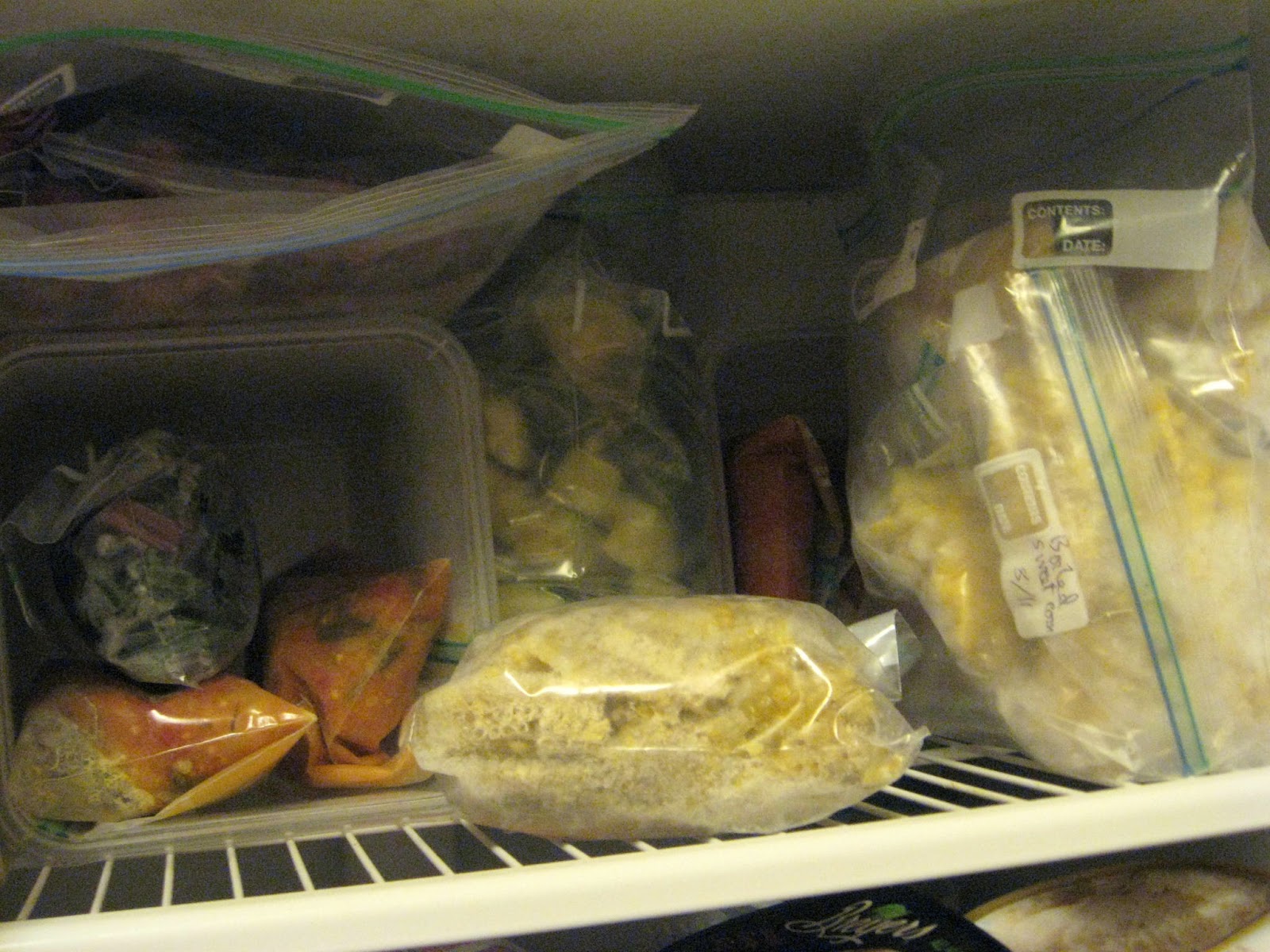
It's that late winter time of year when what's in the freezer can be the most refreshing food available. Although the jars of tomatoes canned last August are long gone, my freezer contains fresh-frozen sweet corn cut from organically grown ears; garden-grown tomatoes and basil; flash-frozen (on a baking pan, to keep pieces separate) green squash in chunks; bags of a gorgeous mix of chard and kale, just barely simmered before being frozen. And there's a bag with smaller containers holding raspberries, strawberries and cherries that my family gathered in during the high summer months of 2011. Gorgeous ingredients for that indoor time of year when outdoors, grey and white gradually begin to yield to green, and we hear the call of springtime birds - and worry that spring is coming too soon. Time is always hastening forward. Savor your fruits and vegs! (Further digging in the freezer unearthed tubs of basil pesto, tomatillo-green tomato salsa, and wild apple-pear sauce.)

Friday, October 28, 2011

Nasturtium Buds and Blossoms - Yum!


Nasturtium blossoms and buds, like violets, add a delicate and piquant flavor to salads. I grow them for their beauty and forget to use them for food – so when it started to snow yesterday afternoon I rushed out into the front patio to harvest the autumn array of nasturtium blossoms and buds. The red and orange flowers with their chic flat leaves were being crushed by the heavy wet snowflakes. The resulting harvest, captured in a bowl indoors, was small but very beautiful. I ate one or two blossoms right away – their crunchy peppery flavor is similar to true watercress (be careful where you harvest watercress – the water it thrives in may be polluted. It’s best to go for market-grown cress, unless you really know the water source).
I read years ago that nasturtium buds can be prepared and used like capers. I am a caper fanatic, pardon me while I switch to my favorite spelling, capar – but their high price and excess saltiness can put off even this extreme saltaholic. As you can see in the photo, I put the buds in a wee bowl with a small amount of olive oil and balsamic vinegar. Go ahead and add salt – I did not.
I placed a covering over the blossoms and marinating buds and refrigerated overnight. This morning the blossoms were still crisp, ready to glamorize the salad that I will have tonight – and the buds are succulent, subtle microcosms of a good salad – they burst and melt in the mouth.

(Those are post-blossom seed pods in the lower left of the photo.)

Autumn is icumen in


Food appetites and preferences shift gears with the approach of colder weather. What causes this shift – the drop in day-length? Why does it happen – to fatten us up for the winter?
While I am sure that “studies have been done,” a conclusive understanding no doubt remains elusive. This is a good reason to get out of the academic grove and head into the kitchen to cook a hearty autumnal meal.
My first clue that autumn was upon us, was an unexpected wild craving for roasted root vegetables – Brian Jaques’ “Redwall Cookbook” suddenly stood out on the cookbook shelf as if spotlighted. While my first autumn feast was not out of those pages, it was certainly inspired by Jaques’ twee but tasty recipes, such as “Mole’s Favourite Deeper’n’Ever Turnip’n’Tater’n’Beetroot Pie” ! We’ll call my meal a cabbage and potato roast-up – no apostrophes were harmed in the making of this dish.
At Ludgates Farm Market I purchased a small head of purple cabbage and a pound-plus of Finger Lakes fingerling potatoes. I cut the cabbage into quarters, put it in an ovenproof pan with a bit of olive oil, garlic, salt and pepper and a small amount of water, covered the pan and roasted this glorious item for at least an hour at around 400 degrees F.
Meanwhile I washed, dried and cut in half the small potats and put them in a glass oven pan with fresh rosemary, salt and pepper, and a few Tbs of olive oil – mixed it all up and roasted it uncovered for 20-25 minutes at 425F. An Epicurious recipe suggested scattering a few Tbs of balsamic vinegar on the finished dish and re-roasting for a couple more minutes – intense favor enhancement!
These handsome, deeply-flavored, aromatic and comforting items lasted me three days – first as a one-person feast; then as side dishes for other happy, home-cooked meals.
The second autumn-craving dish has a name with capital letters: Two-Bean Turkey Leg Chili. It needs improvements – it is a tad heavy on the digestive system – but sure tastes good. I soaked black and pinto beans together with olive oil and garlic. I added about ten more cups of water and simmered, adding a (defrosted) turkey leg left over from our Canadian Thanksgiving, a half cup of uncooked brown rice, and a 15 ounce can of Mexican tomato sauce (hot). Whew!
After 1-2 hours I had me a warming, (spicy), satisfying, but heavy dish – best savored in small bowls with a green vegetable side-dish. Following these two mad forays into midwinter, I ate salads for two days in a row.
The photos show the finished cabbage and potato roast-up and the Two-Bean Turkey Leg Chili, which I ate out of an original Bledsoe Batware mug.

Garden Gratitude – 2011


I am not a very good gardener but am getting better. Last fall I realized, following another growing season of minimal results, that standing in front of lackluster plants shaking my head in puzzlement was not enough – that I had to do hard physical work continuously, and quit griping.
While this year’s harvest was not what anyone else around here would term abundant, it sure was better for me: The additional compost, weeding, mulching and watering (even when the well went dry and I had to lug buckets from the neighbors’ pond) paid off in a modest but continual yield for my fresh produce needs and earthly delights.
I especially want to give a call out to the TOMATOES who gave me daily joy – the small blasts of flavor from the cherries, straight off the scented vines, in the warm mornings, and the earthy aromas of tomatoes in sauce and bright salads in the kitchen; the incredible luxury of having all the SNOW PEAS I could consume daily for over a month; the repeated astonishment of being able to harvest TOMATILLOS in my own backyard for sauces. (Beets and potatoes, let’s try again next spring. And this fall I got the garlic planted in October!)
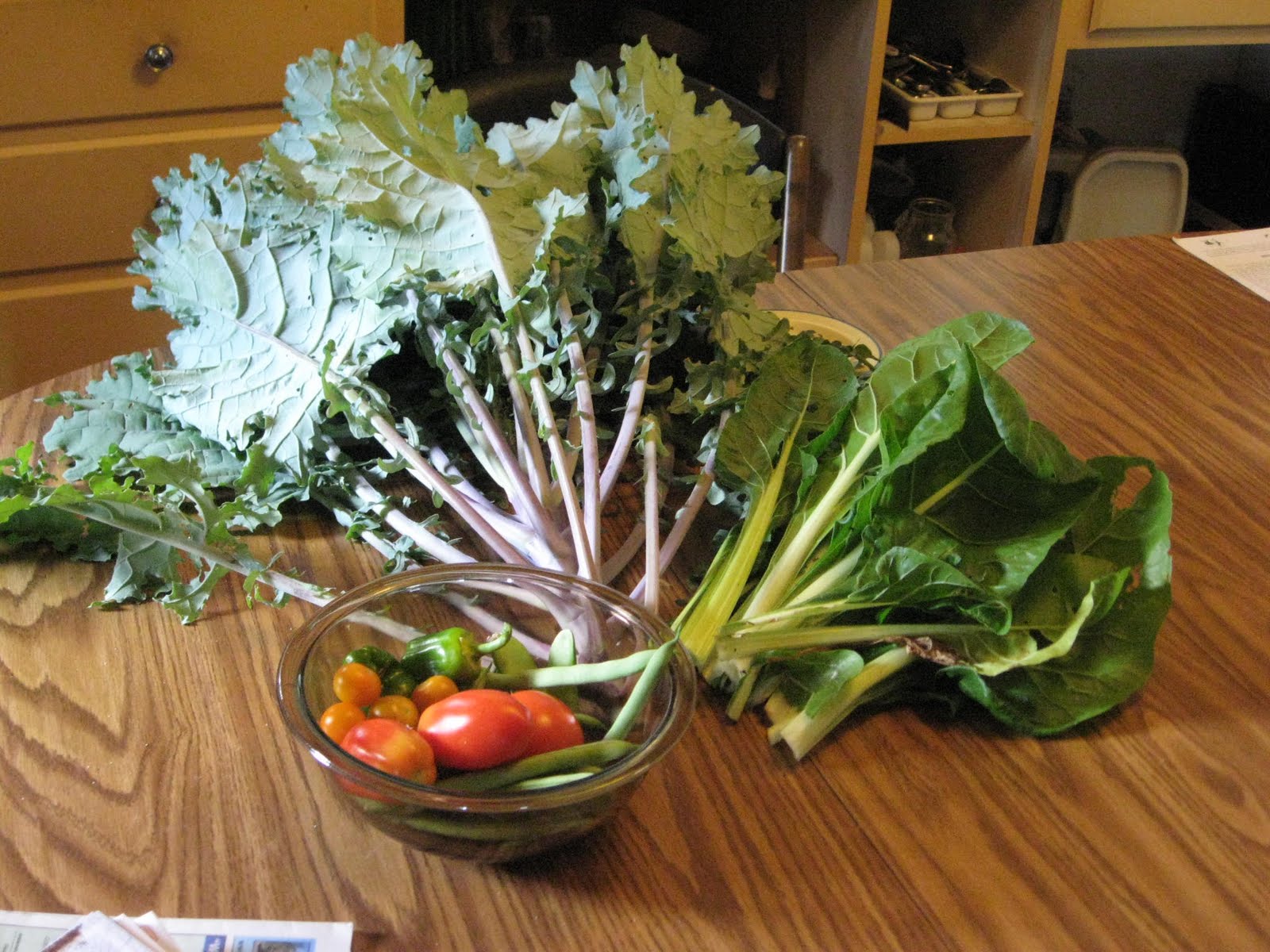
Most of all -- thanks go to the Plantsman Nursery in Lansing for getting me started in earliest April, when the local outdoors was still a mud-bath, with a container of small lettuce and kale plants. I harvested the lettuces within a couple of weeks – what a confidence-booster and SO GOOD; I also planted another kale type and collard green seedlings, from Earlybird Farms just south of Ithaca. The result - ALL SUMMER long I had PLENTIFUL, incredibly flavorful greens for every type of dish – sautéed, boiled, cut up and added to other dishes. When cut, these plants regrew. OMG.
The photos show a midsummer yield and assorted greens bed; the final lingering cherry and plum tomatoes in September, and the goodbye-til-spring harvest of assorted greens – harvested on October 26. Oh yeah!