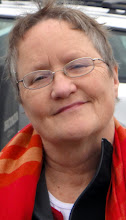
"Ten Thousand Secrets National Park" is a fairy thriller. Thanks to Andrea Humphrey of Boston for nailing down the genre!
Friday, April 13, 2018
What kind of book is it?
"Ten Thousand Secrets National Park" is a fairy thriller. Thanks to Andrea Humphrey of Boston for nailing down the genre!

Fact, Fiction, & Me
 Writing the novel "Ten Thousand Secrets National Park" has been a good way to share what I have learned about politics and human nature in my many years as a fact-based community organizer for environmental protection. Scroll down to 2015-6 blog entries to view synopsis, excerpts and back story. There will be at least a second book in this series, once TThSNP is published (my present task).
Meanwhile, my day job as exec director of a Finger Lakes, NY watershed protection nonprofit made its own demands, so I set aside the novel for a while to - with the help of hundreds - compile, edit and write the 2017 Cayuga Lake Watershed Restoration & Protection Plan, which can be read/downloaded here: http://www.cayugalake.org/files/all/clwrpp_2017_final_4_30_17.pdf . Several people have commented on how strangely readable this report is, for which I give full credit to the different writing muscles developed and flexed during my novel writing process, leading to a felicitous interplay between fact and fiction.
During this fact-focused two-year period I also wrote and had published a scholarly article about water resources and protection in New York State and the Commonwealth of Kentucky, two of the places I know and love best. You can scroll down to view the Abstract (I love writing abstracts) of "Whose Water Is it?" and contact me if you'd like a pdf of the full article. Or maybe you have access to the May 2016 issue of the American Journal of Economics and Sociology 75 (3)! I tried to provide a link to the full article, below, but I am not supposed to do that per my terms of publication (I did not pay), so you cannot view the entire article here.
So now, in mid-April 2018 when trouble is hitting the fan in Washington DC and elsewhere, I encourage you to have another look at "Ten Thousand Secrets National Park," which fits these times like a tailored wet rubber glove. Please send me words of encouragement as I strive to get it published and out there for you and others to enjoy. Thank you.
Thursday, December 8, 2016
"Whose Water Is It? May 2016 article by Hilary Lambert
"Whose Water Is It?" Hilary Lambert AJES 75 (3), May 2016 Click on this link to view "Whose Water Is It?" my article published May 2016 in the American Journal of Economic and Sociology 75 (3). Thank you.
ABSTRACT
Whose Water Is It?
By HILARY A. B. LAMBERT*
Legal protection of the USA’s water resources was reduced
during the Bush-Cheney Administration (2000–2008), facilitating coal, oil,
and gas development at the expense of clean water. The “Halliburton
Loophole” in the 2005 Energy Act exempted all oil and gas development
activities, including fracking (hydraulic fracturing), from the Clean Water
Act, Clean Drinking Water Act, and other federal statutes. Two U.S.
Supreme Court rulings weakened the Clean Water Act’s protections of
headwaters, streams, wetlands, and other water bodies. In New York
State, communities faced with the imminent prospect of fracking by
energy companies organized. From 2008–2014, they prevented fracking
in New York. Water protection played a major role in energizing
community response, In 2015, a fragile, but resilient, ban was declared
statewide. In Kentucky, 150 years of coal mining resulted in pollution of
many waterways, with hundreds of stream miles buried beneath
mountaintop removal debris. Kentuckians have been pushing back since
the 1930s to protect communities, farms, and water quality. They remain
hopeful in the face of great odds. Urban populations making daily use of
cheap, clean water and fossil-fuel-powered energy sources have little
knowledge of these struggles. In rural America, the fight to protect
communities, lands, and waters from energy exploitation is lifelong.
===
protection and educational NGO in central New York State. AB, anthropology, Brown
University; MA, PhD, geography, Clark University. Taught at Rutgers University, Miami
of Ohio, University of Kentucky. Former editor of FOCUS (American Geographical
Society of New York). Associate Director of the Kentucky Waterways Alliance. Community
organizer on behalf of the environment for many years in Kentucky and New
York State.
Tuesday, May 19, 2015
What could possibly go wrong? TTS excerpt - caving under the Green, Green River

We turned toward Hugh, who was on his
stomach next to the hole, shining the big light down. Creeping up carefully, Lena and I peered into the round, straight-sided limestone shaft, about ten feet across.
“How deep?” asked Lena.
“Thirty feet,” said Hugh.
“Guesstimate.” The sparse cave stream poured over the edge next to him,
plummeting noisily down the shaft and into a hole in the floor way below.
“That drain,” Hugh shone
his big light at the hole, “must head toward the Green, Green River, which is
only about two hundred feet that way” – he pointed toward the far wall –
“north.” He got up and we backed away from the hole, stepping carefully in the
slick mud.
“We shouldn’t be so close
without a safety rope,” Lena said, but Hugh was shining the superlight around,
and had found the hole in the wall of the big cave room.
“That has always been full of water,” he said, striding over and bending to look inside.
"Let’s go,” he called, disappearing into the hole.
“Wait,” said Lena as we leaned
inside the small opening, lights showing a narrow muddy passageway that sloped
steeply downward. “What are you planning to do?”
“We’re here, we have the
time, let’s see if this goes,” Hugh called back, his voice muffled by the tight
space.
Lena turned to me. “Can
you manage this?” she asked.
“Only one way to find
out,” I said, and began climbing down the steep corkscrewing passage, feet
first.
“Go Mom,” she said,
scrambling in behind me. The tight walls supported my shoulders as I scooted
down, feet seeking the way, Lena close above, both of us accumulating a mud
coating. I soon heard Hugh’s voice. His light was shining on my feet.
He called, “Just
lie down and scoot out on your butt and back,” and I slid out a two-foot hole
onto the floor of the shaft. I got up, followed by Lena, and stepped through
the pattering waterfall. Hugh was shining the superlight at the drain in the
floor.
“It goes!” he cried
excitedly, and sat down on the edge of the hole, looking around for us to
follow.
“Can you just wait a
minute,” I said. Lena shone her headlamp at the sides of the shaft, the
waterfall, the small side hole we had emerged from, and upward to the rim of
the shaft, now thirty feet above us.
“What’s the plan, Stan?”
she called to Hugh over the racket of the waterfall, loud in the confined space
of the shaft. Removing a chocolate bar from a pocket, she broke off a chunk and
handed it to me.
“Water break,” she said,
deliberately slowing the pace. Hugh got up and joined us. We had a long cool
drink from our canteens and relished our candy bars.
“It’s only another two
hundred feet to the river,” repeated Hugh, wolfing down his snack. “Based on
what we already know, this drain here should drop ten feet and then go right
under the river.” He adjusted his pack, put the superlight away, and turned
toward the drain hole.
“You are saying that this
little hole here goes underneath the Green, Green River?” I asked. This
situation was beyond my comfort zone. “Is this safe?”
“I think,” said Hugh,
visibly impatient, “And Steve Roberts thinks, along with our entire science
team -
”
Lena raised her eyebrows to
interject, “A whole five people,” as he continued.
“The Pleistocene re-set of
the river’s north shore re-opened a passage that went under the river during
that ancient era. Water pressure here, in this drain, pushed open a plug. We
can now get under the Green, Green River and into the Pleistocene via this
drain. It’s the path the cat used.”
He said, “We
have been in here only an hour. Let’s give it one more hour. OK?” We nodded.
“C’mon,” he said,
scrambling into the small drain. I followed, Lena behind, climbing down,
leaning away from the water. The drain was smaller than the last climb-down and
I slid down the slick rock face. We scrambled downward on ledges, back and
forth across the vertical drain. We climbed down one side of the widening
canyon once our legs were unable to bridge the gap. Hugh’s light shone up from
below and he shouted something I could not hear above the noise of the
waterfall.
“What’d he say, did you
hear?” I called up to Lena.
She puffed, “This
is longer than he said it would be. Damn it.”
I heard Hugh again, and reported to
Lena, “He said ‘hand-line.’ ”
“Oh shit,” she said,
“Wait a minute, ok?” I held onto the wall as she opened her pack, removed a
rope, and tied it off on a projecting rock. The line dangled down toward Hugh’s
light, fifteen feet below.
“OK,” she instructed,
“Hold onto the line the rest of the way down. You may have to drop.” I edged carefully down, one hand and arm
wrapped around the slender line. Next step, my left foot met empty space.
Hugh called, “It’s
only a three-foot drop. Use the line to brace yourself – straighten out –” he
was right there, holding on as I dropped, plummeted and landed. I let go of the
line as Lena landed lightly behind me. We were in a small bowl-shaped room. To
go back, we would have to climb up into the wide drain hole in the room’s low
ceiling. Water from the drain flowed across the flat floor into a side passage.
Something shiny on the floor –
“Is this cool or what,”
said Hugh, walking over to an inflated dinghy. He spoke loudly over the racket
of the water. “This was sucked all the way down here when the lake emptied.” He
lifted and dropped it. “You saw there was only one up there, at the landing,
right?”
“Why did it stop here?”
asked Lena. She shone her light at the small passageway ahead.
“Maybe the suction
dropped, at this point,” said Hugh, “Like, you know, the giant toilet bowl
flush was complete.” I envisioned the rubber raft being yanked from its rope,
circling the shaft and plummeting as the lake room emptied, then being sucked
into the canyon we had just scrambled down. I’m mentally tough – have to be –
but with the distance piling up between us and the blue sky above, I was
feeling a little bit uneasy.
“Not much use here, is
it?” I said, masking my discomfort with a kick at the poor lonely thing,
stranded down here. Lena, who knows me well, shot me a look.
Hugh laughed and said, “We’re
about ten feet below the bed of the Green, Green River – and that passage will
take us underneath it to the Pleistocene.” He said, “I hope you understand how
important this is,” and led the way. The three of us hunched over to fit into
the narrow five-foot passage and headed north, splashing in the stream.
Excerpt from Ten Thousand Secrets National Park (c) 2015 Hilary A.B. Lambert
Friday, May 1, 2015
Synopsis, Ten Thousand Secrets National Park

Janet Harper works at Ten Thousand Secrets
National Park Casino & Entertainment District in Kentucky, following a
mysterious explosion at her previous workplace, Nevada’s Historic Red Light
District & Jazz Casino National Park. In hiding from her two children for
over a year, Janet is tracked down by her daughter Lena, and they are drawn
into a struggle between the Federal Parks Service and the Department of Defense
over control of time travel, which has been in Park Service hands since its
discovery by Cornell Tech scientists twenty years earlier.
Fronted by charismatic Professor Thomas
“Cat” King, a small but influential faction at the Department of Defense is tired of hearing liberals
whine about the “environmental impacts” of time travel, and is planning
military expeditions to correct past disappointments. As King says at a
D.C.-area holiday party, “George Bush is gonna thank me big-time when we go
back and clean up his messes.”
Meanwhile, Janet’s son Brian writes a
community development grant for a rural hamlet in south-central NY State. He
meets their beautiful leader Maeve and becomes enmeshed in her fervent search
for grant funding to support her immigrant Irish fairy community, hiding in
plain view near the city of Corning for centuries. Brian and friends are
soon fighting a highway project that Maeve’s Congressman has cajoled her into
supporting. The highway would destroy a nature preserve in our world, while
leaving the landscape untouched in Maeve’s alternate present time. She
explains it this way to Brian: “Why would you deny us the chance to
better ourselves? With an interchange and big road, we can draw in visitors for
short and longer stays. We want what the rest of the world has. And we need
people.”
Tom King has added Maeve’s community to his
inventory of “natural time openings,” where he can mount military expeditions
to the past without going through the federal government’s laborious
environmental impact process. His dark ally, Senator Harlan Styce of KY, helps
King seize control of the Park Service’s top-secret time travel research
program, operating as the Pleistocene Place theme park attraction at Ten
Thousand Secrets National Park. Styce lines up his ducks: “We funded the Parks
folks to study time travel for the sole purpose of its defense applicability.
OK! We’re there! Time’s UP.”
Janet races to complete her own dire
mission at Ten Thousand Secrets NP before King’s military minions arrive, while
struggling to keep her children safe from seductive fairies, malign Senators,
fracking gas well explosions, flooding caves, bad time trips, and her own
dangerous behavior. Wonderful allies emerge to help, among them Senator Liz
Maximus of Massachusetts and her brilliant staffer Ravi Sen-Ellis, who knows
the right questions to ask: “What time is this place?”
Tuesday, March 31, 2015
Meet Ravi Sen-Ellis, and get an eyeful of Dr. Tom "Cat" King: Excerpt from Chapter 7 of Ten Thousand Secrets National Park.
King had augmented his pre-party drinks with whisky
neat, twice. Standing next to his date he scanned the battlefield for prey,
lusting to inflict lasting damage.
He saw
Ayres and thought, ‘Time to finish him off in public.’
 Professor King’s signature bullying move was to plow into a person’s private
space belly to belly, eye to eye. Few in polite society could withstand this.
He had tired of the hushed brutality of academia, where professorial gladiators
fight for the death of their colleagues’ programs via committees, publications
and tenure, always smiling and collegial. King brought physical intimidation
and violence into the university coliseum. He used these weapons carefully, lacing
aggression with charm and synthetic warmth, catching opponents off-guard. And
now, his new position made him unassailable, even terrifying. As he shoved
through the crowd to get at Ayres, people turned in irritation, falling back
when they recognized him.
Professor King’s signature bullying move was to plow into a person’s private
space belly to belly, eye to eye. Few in polite society could withstand this.
He had tired of the hushed brutality of academia, where professorial gladiators
fight for the death of their colleagues’ programs via committees, publications
and tenure, always smiling and collegial. King brought physical intimidation
and violence into the university coliseum. He used these weapons carefully, lacing
aggression with charm and synthetic warmth, catching opponents off-guard. And
now, his new position made him unassailable, even terrifying. As he shoved
through the crowd to get at Ayres, people turned in irritation, falling back
when they recognized him.
The Smithsonian guy felt the force approaching.
Looking up, he saw King, said to Bob Ayres, “Oh shit, well, come see us when the dust
settles, a quiet life is what you need,” and vanished. King addressed Bob loudly,
playing to the crowd.
“Go
home, Bob. You’re out of the game.” His physicality smelled out the weak spots,
where his victim’s vitals rode near the surface. He would hurt Bob quickly.
“This party is for winners and players. You need to be sitting in the bleachers
at Kevin’s ball game. At least he misses you. You’re wasting your time
here.” King’s public naming of Ayres’ child was a threat. Bob was suddenly on
fire, as King intended. But a quick retort was unwise, so he stood quiet, pale.
A hand patted his shoulder – a warning to keep it cool. Who was that? Bob broke
stares with Cat to glance at the Vermont Senator’s young head of staff, smiling
supportively.
King
took advantage of the distraction to step forward and push Bob against the
wall.
Bob
smelled the whisky as Cat stage-whispered, “Your liberal-assed science is dead,
and I killed it. My science is hard – and mean – and takes no
prisoners.” He pressed Ayres into the wall with each word. Even for King, this
was excessive use of force in public, and a little gross. A voice called out
the big man dominating the smaller man.
“Hey,
King! Get a room!” This drew shocked laughter from the group, which scattered
as King swung around, looking for the heckler. Ayres moved away, sucking in
cold air from an open window. Up came the Vermont Senator’s staffer, mighty
pleased with himself over his anonymous act.
“Do I
need a drink after that?” Ayres asked him, while shaking his head to deny the
impulse. “What I need is dessert first, dinner later. I am starving.” They
walked to the buffet and Ayres piled up all the sweet stuff he wanted, thinking
how he would describe the fancy array to his kids.
Through the crowd they heard King boasting, “New science, action-focused,
restoring our nation’s pre-eminence,” but his words failed to sting. The two
took their plates to a quiet nook and Ayres began to eat, soon feeling a rush
of relief and calm.
“My
name is Ravi Sen-Ellis, by the way,” the staffer said. “We met at the Parks Science conference last
month.”
“Right,” Bob replied. “I was trying to hint to you, around the top secret
elephant in the room, that time travel is emerging as an excellent tool for
ecosystem management and recovery.” Ravi’s eyes flew open, and he stopped
munching on a fancy morsel to think about what he had just heard.
He
said, “Suddenly I have a million questions, but why don’t you keep going for a
minute or two.” He took a couple of bites as Bob continued.
“It
won’t be a secret much longer, with that asshole in control,” Bob said,
shrugging a shoulder in the direction of King’s voice. At the other side of the
room, Ard Sprinkle was having a heck of a time convincing the boss that it was
time to go home. He had one of Cat’s arms into his coat and was walking him
slowly, begrudgingly toward the door. Anna Holms waved bye-bye, shutting her
ears to King’s exhortations.
“We
can finally optimize our country’s military heritage. George Bush is gonna
thank me big-time when we go back and clean up his messes. Congresswoman,
Ohio’s bases are going to benefit big-time.” Out the door, his voice trailed
off, “Better get on board while you can.” Cat’s date was waiting in the car,
fuming. General Granger stood well clear of the uproar, busy lobbying on behalf
of King’s interests with a Ukrainian arms dealer over Cognac, as the door
closed behind King and Sprinkle.
Granger shrugged, “Hey, he just won the biggest fight of his career. Has to let
off a little steam, you know?”
In the
quiet nook, Ayres told Ravi, “The Homeland-Interior program I just lost was
researching the environmental and societal impacts of time travel.”
“OK,
so I didn’t imagine you said that,” replied Ravi. His voice trailed off;
he was dumbstruck with wonder. And desire. “Oh my goodness,” he said. “That
Kentucky Pleistocene theme park. That’s real?”
Ayres
nodded, smiling. “Each day there is the same day, re-set every twenty-four
hours. That way we can – could – entertain visitors safely, and do
research, without long-term impacts.” He scraped the last bit of ganache off
his plate and looked at the dessert buffet. He would snag some of those neon-bright cookies for his sons. They loved the silly stories about his big nights out, his
wife giggling, relaxing after her own hard day.
Ravi
was staring at him. “Can you come give me and the Senator a briefing? I can
barely believe this, but I guess I have to.”
“Sure,” said Bob. “I’d love to tell you the science. I’d love to talk to
someone who appreciates what we have achieved. The secrecy has been a real
bummer.”
“I
don’t get that part,” said Ravi, gently probing, privately horrified. “How
could they keep a discovery like that under wraps for twenty years?”
“Back
in the day, the development team at Cornell Tech was Homeland funded,with
proprietary protections in the contract. When they hit paydirt, a bunch of
profs quit their day jobs to work for Homeland under tight security.” Ayres
swept a pile of neon macarons into a napkin, and the two walked
toward the door.
Putting
on his coat, Ayres bent close to Ravi’s ear. “You may be too young to remember
that we had a brief window of liberalism in the White House back then, so
Homeland was forced to go halfsies on the program with the Department of
Interior. They gave it to the Federal Parks Program, where it landed in my lap.
It was my top-secret baby until they gave it to King.” Out on the steps they
breathed cool air, momentarily alone as Ayres’ car approached.
Bob
summed up: “Twenty years of top secret time travel research, serving the Park
Program’s twin goals, protection and enjoyment. While fending off Homeland,
which pushed us to develop ‘military applications.’” Bob spared Ravi the
“quotes” gesture.
“So,”
Ravi said, “The Senator and I regard King as a kook. His teaching colleagues
say he is disruptive, and they suspect his science is fake. Why is he running
this show? What’s he planning to do with …” Ravi sighed and shook his head in
awe, “…time travel?”
As Bob
stepped into the car he said, “Fake science, huh? That could be very useful. He
is running the show because he says what some in the military want to hear.
What’s he wanna do? He wants to go back and change history, so the USA comes
out on top. I mean, to coin a phrase, duh.”
Ravi
watched the car depart. The muted nighttime roar of our nation’s capital region
hummed outside the enclave of big houses. He was aflame, his life’s dream come
true, in a casual party conversation. Wherever this led, he was already there.
In a state of bliss, he walked to his car in a distant lot.
Excerpt from Ten Thousand Secrets National Park (c) 2015 Hilary A.B. Lambert
Saturday, March 21, 2015
The Road to Hollymount Inn... Excerpt from Chapter 2 of Ten Thousand Secrets National Park

The woods ended. Beyond lay winter fields, dotted with small cottages. In one field stood a small horse, a miniature variety. This looked normal – back-to-the-landers, ten acres, cabin, off the grid. At the foot of a distant wooded hill, buildings lined the road. One was larger, the elusive Inn, I hoped. The beauty of this upland valley scene caught me, golden light deepening the mild browns and pale blues of winter. The land gleamed with wisdom, speaking a language I did not understand.
‘Where are all these wild thoughts coming from,’ I thought. ‘I need to get out more, hang out online. How can I get my career going if I am a kook? I gotta cut out the fantasy books and games. I’ll be useless over lunch with Maeve and they’ll never hire me again.’
I walked fast, gazing at the lazy arc of a crow overhead. It descended to the road, ten feet ahead. The crow – two feet tall, a strut to its walk and shining black eyes – approached me, bowed, turned around, and walked alongside. We moved forward at a good pace, and I met the gaze of my silent companion. The crow tilted its head and nodded in a friendly way.
I said, “Hello, I am Brian Owen, but maybe you already know that.” The crow nodded in response, and we proceeded in what seemed a friendly silence. Nearer, the big wooden building had an Inn-like air about it, romance novel style. Its two storeys had curtained windows along both floors, and it was painted dark blue. Stone chimneys wafted pine-scented wood smoke. Two shapely trees framed wide steps up to a wooden door in the center of the rambling old building. Above the Inn loomed white pines and holly trees – tall, massive, twisted. There was no parking lot.
The crow darted into a nearby cottage garden and returned, in its beak a sprig of the small white flowers that speckled the fields and roadside. Fluttering off the ground, the bird hovered in front of me, placing the sprig carefully in my jacket pocket. Then it spiraled upward, cawing loudly in the cold air, and was gone. I did not watch, my eyes caught by the sign posted by the big front door. Written in chalk, it read:
Hollymount Inn
Today’s Lunch
Smoky broth
Roast viands
Ambrosia
Special today!
Serving Humans
Something was a bit off there, but I was hungry, and climbed the steps. The door swung open inward, and a beautiful woman stood in the doorway. Not red hair – black and soft, curling. Pale white skin, dark blue eyes, long black eyelashes. Wearing jeans, cowboy boots – and a green sweater a little bit unbuttoned at the top – she was smiling at me.
Excerpt from Ten Thousand Secrets National Park (c) 2015 Hilary A.B. Lambert
The photo depicts the woods along the path to Hollymount Inn. At the O.D. Von Engeln Preserve, Dryden NY.
Wednesday, March 18, 2015
The Sabertooth Tiger: While government factions vie for control of time travel, the tiger follows his nose.

Its allure drew him through miles of dark passageways under a river, through a tingling barrier, and up into daylight onto a hard black surface surrounded by giant trees. He would take a nap in their branches, but first - that big meal. Ahead was the dumpster with its siren scent of discarded taco salads, burgers, chili, grits, sausage gravy and bacon. Oh man.
The young beast leapt lightly into the bin and began to feast, right outside the back door of the Hideaway Café & Curiously Satisfying Breakfast Buffet, one of many fun eateries in the national park's Casino & Entertainment District.
Presently a busboy came out and climbed up the steps to the bin, intent on dumping a full trash bin from satiated lunchtime eaters. Large tawny eyes rose to meet his. He saw a five-foot long, 150-pound wild cat with curving foot-long canine teeth, screamed, dropped the trash bin and fled, slamming the door behind him. The cat started in on the cascade of delicious fresh garbage, thinking maybe soon he should climb into a tree and ponder the edibility of these hairless animals. His family would be proud of him for finding new food.
The above photo was taken on an unnamed road in an unnamed Kentucky national park. Fabulous new hunting grounds for the young sabertooth tiger who had found a hole in the time barrier maintained by the Federal Park Service and Homeland Security.
Tuesday, March 17, 2015
Maeve. A thousand years ago or longer, Maeve departed Ireland for the New World...

But it was lonely there, and the fairies did not get along with the Iroquois tribes and obnoxious European settlers, many of whom were straight off the boat from Ireland, singing songs that created a deep longing for their older home. By the early 21st century most of her kind had returned to Ireland, leaving Maeve with a few dull, marginal fairies to help her tend her nature kingdom and find the funds and human flesh to pay her regular taxes to the underworld.
In desperation, Maeve began to haunt local bars in Corning and learned that she had a friendly Congressman, and could apply for grants to support her little community. The men who explained these basics of American life to the apparently guileless, black-haired, blue-eyed beauty sometimes did not return to their homes and families. As our story begins, Maeve has hired a local grant writing consultant, young Brian Owen, to help her obtain a community development grant.
This photo was taken along Goodhue Creek, just off the Great Eastern Trail on the north bank of the Canisteo River, near Addison NY. Maeve's community is not far away.
Monday, March 16, 2015
Introducing Ten Thousand Secrets National Park, a science fiction fairy tale embedded in present-day US politics.
 Last fall I found the time for novel-writing: 6:00-8:00 am. Six months later, I have the second draft of a grand novel - finally, out of my head and onto the page. In it, a mom and her family cope with the fallout of her obsession with environmental causes. Their attempts to reconcile are complicated by a political fight for control of government-regulated time travel, and the seductive call of an immigrant fairy community nestled in the New York State landscape.
In this slightly altered present, casinos and gas fracking wells pay for our national parks, and a Kentucky senator rallies his bad-ass allies to update our nation's proud military heritage.
Will science survive? Can we ignore the Grandfather Paradox of time travel and get away with it? What's Brian's mom up to now? Which of the many secrets would you want to explore?
I'll share excerpts and images here while embarking on the grueling process of publishing this novel of fast-paced adventure-fairy tale-ecofiction. If you accept the presence of swear words, plot-appropriate mayhem, and delicate hints of off-stage romance, the book is enjoyable for adults and older kids.
The photo of young woodlands comes from Kentucky's Little Barren River valley, just east of a famous national park. In this story the government has re-named it Ten Thousand Secrets National Park Casino & Entertainment District, to attract a more diverse, bigger-spending clientele.
Monday, December 23, 2013
A better nutcracker: Black walnuts and hickory nuts galore
 Thanks to family members, I now have the right tool for the job - a nutcracker built to open black walnuts, not to mention shagbark hickory nuts.
Nuts are healthful, and available by gathering them into a bag as we walk in the woods or along pasture edges.
To shell the nuts easily, if you don't have access to workshop tools, vices, grips and the like, you need one of the super-strong, expressly designed nutcrackers available via a google search (see photo - around $50).
Now I will be less dependent on watching for supermarket "specials" on the price of English walnuts. Black walnuts are famed for their rich flavor and go for very high prices in the market place. A big thank you to my family for helping me bring the price waaaaaay down.
Woodland riches are free for the gathering. Watch for future posts on my recent adventures with black walnuts, shagbark hickory nuts, beech nuts, beech sprouts and more.
Friday, November 22, 2013
Jackie Kennedy's condolence thank-you cards - one came to me
 On November 22, 1963 I was 11 years old. I remember where I was when I heard the news, of course, and subsequently was watching live black and white TV when Oswald was shot by Jack Ruby. During these days I asked my mom what I could do, and she suggested that I send a letter of condolence to Jacqueline Kennedy.
I promptly wrote and sent the letter. Its contents are no doubt lost to history, but I saved the response I received in March 1964, after the Beatles had arrived in America and the world was rapidly changing beyond belief from those dark November days.
The black-rimmed card reads "Mrs. Kennedy is deeply appreciative of your sympathy and grateful for your thoughtfulness." The accompanying card has her signature on the upper front right-hand corner in place of a stamp, my name and address written in exquisite calligraphy in ink, and her married name printed across the back flap.
 My newly-12 year old self also saved the March 18, 1964 New York Times article, "Shamrock is left at Kennedy grave," describing Mrs. Kennedy's visit to her husband's grave on St. Patrick's Day, and announcing "Mrs. Kennedy chose today as the "appropriate" time to acknowledge the messages of sympathy she received after her husband's death. She mailed 900,000 black-bordered prayer cards and letters"....the article adds that 2000 volunteers had been working since the previous December to open and sort the letters; that 1000 per day were still arriving at the White House; that the signature-franked letters had been distributed over a week's time to avoid post office overload.
-- Hilary Lambert November 22, 2013
Sunday, July 22, 2012
Grape leaves are ready by June to make dolmas
 In June around the summer solstice, I took an early morning
walk in the fields across the road, and followed a side path into a profusion
of young goldenrod plants and trees festooned with wild grape vines. I quickly
gathered a passel (30-40, that is) of big lush new grape leaves, to make a pile
of dolmas for a solstice party that night.
In June around the summer solstice, I took an early morning
walk in the fields across the road, and followed a side path into a profusion
of young goldenrod plants and trees festooned with wild grape vines. I quickly
gathered a passel (30-40, that is) of big lush new grape leaves, to make a pile
of dolmas for a solstice party that night.
Yep you don’t have to buy them at the $7.89 per half lb
olive bar, you can make them yourself. I used to buy jars of preserved grape
leaves, but this is more fun. I first posted about dolmas using wild grape leaves late
last August http://www.backinthecaragain.blogspot.com/2011/08/wild-grapes-their-leaves.html,
but by then the leaves are a tad leathery and not so succulent when cooked. So grab
‘em young (a good motto generally!). They are still fine in late July – I harvested
a bunch on July 21 on the high ground above Fall Creek off Freese Road. The
local hipster enviro camp counselors seem to be using the “forked dragon’s
tongue” characteristic of the grape vine’s growing tendrils to help little kids
identify this plant but heck, it’s just grape leaves, eh?! (other motto: “What could
possibly go wrong?”).
 I cooked the grape leaves in boiling water for 1-2 minutes
until they turned from bright green to olive green – drained and let them cool.Cut off the stem ends. Reserve a few to cover the bottom of the dolmas simmer pan.
I cooked the grape leaves in boiling water for 1-2 minutes
until they turned from bright green to olive green – drained and let them cool.Cut off the stem ends. Reserve a few to cover the bottom of the dolmas simmer pan.
Anticipating a gluten free vegan crowd at the solstice
party, I grabbed my ancient trusty “Middle Eastern Cookery” by Eva Zane (101
Productions, San Francisco, 1974) and went with her “Basics” dolmas stuffing recipe:
1
cup (white) rice soaked in cold water and drained.
 ¼ cup
each currants and pine nuts (I had raisins and not-roasted almond slivers, used
them instead – this is based on the Peggy Renwick principle of “substitute everything”).
¼ cup
each currants and pine nuts (I had raisins and not-roasted almond slivers, used
them instead – this is based on the Peggy Renwick principle of “substitute everything”).
1
cup finely minced green onions or 1 cup grated onion (me, 1 cup roughly chopped
onion).
3 T
minced (fresh, please) parsley.
2 T
fresh chopped dill.
2
garlic cloves (Zane sez “optional,” I say “Nonsense”)
½ tsp
allspice
Salt
and pepper to taste.
Stir
this all up. Place a grape leaf on towel or counter or plate (“dull side” up –
I could not discern a dull side; they both work). Place 1 – 3 tsp of filling on
the leaf (depends on the size of the leaf). Here are the directions I cannot
seem to fully comply with: “Fold end of leaf over to cover filling, fold sides
in and starting at stem end, roll carefully to form a firm cylinder about 2
inches long, depending on size of leaf.” My firm cylinders look more like tiny envelopes,
but they work just fine. Do this for all the grape leaves, eh?
You
may have leftover stuffing. I cooked it in a saucepan w/added water and served as
a side dish with certified gluten free tortilla chips and it was wolfed, reckon
that should be deered, down.
Spread
the “reserved” leaves on the bottom of a heavy saucepan, place the dolmas side
by side across the bottom, then stack them up until all are, well, ya know, in
place (my recipe lingo falters occasionally, here because I am way too self
conscious about that foodie term “reserve”).

Sprinkle
the layers with lemon juice if you have it. Add 1 cup water or stock (I added more
as needed while it cooked – don’t want the dolmas to scorch), 3 T olive oil,
and cover with a heavy plate, saucer or other simmer-proof item, to prevent the
dolmas from unfolding while cooking. Cover and simmer over low heat, checking
frequently, for about 1 hour. Test for tenderness (eat one). Remove from pan,
cool, and place on a serving platter, garnish with parsley sprigs and lemon
wedges if you got em. Serve with bowl of chilled yogurt (plain not
sweetened), or not. They will all be eaten quickly.
Monday, July 9, 2012
Quick Fixes and the Sustainable Long Haul: Hemlock Woolly Adelgid, Hydrilla and Our Watershed
Quick Fixes and the Sustainable
Long Haul
Hemlock
Woolly Adelgid, Hydrilla and Our Watershed
Forthcoming in Network News 2/12, newsletter of the Cayuga Lake Watershed Network www.cayugalake.org. Thanks to Mark C. Whitmore and Judy Abrams for editorial assistance.
Hilary Lambert, Steward
In the winter 2011 issue of Network News, our lead article stressed
the need to work toward a sustainable energy future for the Finger Lakes, in
the face of a rapidly warming climate. The choices we make and paths that we
follow in the near future will determine the long-term fate of the clean and
plentiful water our region (and the Great Lakes) is presently known for.
The Cayuga Lake Watershed Network Board of
Directors’ actions and Network programs increasingly stress the interdependence of
clean water and energy choices. The Network’s 2011 Strategic Plan includes the goal of “supporting
new and ongoing successful collaborative projects with short and long-term
impacts on maintaining and improving the lake, its tributary creeks, and the
watershed,” by “helping communities prepare for climate change impacts.” Further,
in May of 2012, the Board voted to approve a “Position Statement on
Hydraulic Fracturing,” stating that “We
oppose the continuation of hydraulic fracturing and urge immediate emphasis on
an energy policy that promotes conservation and renewable energy sources."
Early symptoms of
climate change are extreme weather events and the movement of species into
regions where they previously could not survive. The invasive species presently
bedeviling Cayuga Inlet in Ithaca, Hydrilla
verticillata, is from temperate latitudes similar to ours in Korea, and
survives well in northern climates: it is not a true climate change opportunist.
However, part of the Hydrilla Task Force’s initial response strategy was the
hope that a cold winter would kill off plants established in shallow waters.
Instead, the mild (or “missing”) winter of 2011-12 helped hydrilla survive and
prosper. As with the Asian Clam infestation in Owasco Lake to the east, this
apparently “new normal” weather benefits the spread of these aquatic invasive
species.
For information
about the excellent long-term eradication program developed by the Hydrilla
Task Force of the Cayuga Lake Watershed, information about possible impacts of
herbicide use, and “everything” hydrilla: http://www.StopHydrilla.org. To sign up as a Hydrilla
Hunter, contact: ambismb@gmail.com.
Another
aggressive invasive – this one attacking the hemlocks in our gorges – is the
aphid-like Hemlock Woolly Adelgid (Adelges
tsugae, aka HWA). A true climate change opportunist, HWA has been making
its way north for decades with terrible destructive force, sucking the life out
of majestic old hemlock stands in the southern mountains and valleys, and
turning the hemlock stands in New Jersey’s wilder places and Pennsylvania’s
uplands into brown skeletons (maps: http://na.fs.fed.us/fhp/hwa/maps/distribution.shtm).
Cornell’s Mark
Whitmore is a forest ecologist and nationally-recognized expert on HWA, which
first appeared in the Finger Lakes area of New York State in 2008. He has been
mapping its spread and advising on limiting its immediate impacts, and is also
concerned about the Emerald Ash Borer’s potential for ecosystem
destruction/transformation, in this period of rapid climate change.
Why is HWA a
problem? Most obviously, it destroys one of our most beautiful, evocative
trees. In ecosystem terms, hemlocks are a keystone species for our cool creeks
and their biodiversity. If hemlocks die, creeks will be exposed to the sun and
warm up, and steep shale banks will erode and collapse, altering creek habitat
and sending warmer, turbid waters to Cayuga Lake.
In 2009, HWA was found on
hemlocks in Cornell University’s Cascadilla Gorge and around Beebe Lake. In
response, a collaborative project, involving Cornell Plantations, Cornell’s
Department of Natural Resources and Mark Whitmore, was organized to track and
where possible mitigate HWA impacts. A trained group of citizen-stewards carry
out regular monitoring for the spread of HWA in Six Mile Creek, Edwards Lake
Cliffs, Fall Creek, Fisher Old Growth, Lick Brook, Steep Hollow, and Coy Glen.
This local effort is part of a larger project, led by Whitmore, to meet the
challenge of invasives by increasing stakeholder knowledge and involvement.
That means you! Learn more and get involved via the Cornell Plantations
invasive species web pages: http://www.cornellplantations.org/our-gardens/natural-areas/invasive
The non-winter of 2011-12 may
be responsible for a sudden leap of HWA along
Cayuga Lake’s western shoreline. In 2011, the infestation was mapped as individual
infested trees and small stands, in the Glenwood Pines area along the
southwestern Cayuga Lake shoreline. Not so any longer.
In early July
2012, Judy Abrams noticed something wrong with a big hemlock that holds down
the banks of a steep shaley creek on her lakeshore property, several miles
north of the Glenwood area. She learned that the tree was infested with HWA,
and soon realized that all of her estimated 200 hemlocks are infested or will
be soon. Judy called neighbors to the south, toward Glenwood – they have it
too. A quick check revealed that it is present in hemlocks on all their
properties.
 |
| Lakeside landowner Judy Abrams and affected hemlock tree. Note the creek it shades, and steep shaley banks it stabilizes. |
As with hydrilla,
the immediate, short-term management options for HWA include insecticides – infested
hemlock trees can be protected individually with chemical insecticides. Cultural
practices can also slow impacts; biological control agents are under study (Fact
Sheet, Early Detection of the Hemlock
Woolly Adelgid (Adelges
tsugae) in Small Northeastern Hemlock (Tsuga canadensis) Woodlots, www.ForestConnect.info).
Here we arrive at
the question of the sustainable long haul mentioned in the title. Herbicides
and pesticides applied over several years will have adverse impacts on Cayuga
Inlet, and on our gorges and their creeks. The potential for homeowner misuse
of currently registered soil drench pesticides and subsequent environmental
contamination (proximity of streams) is great. Professional applications pose
far fewer risks and can help save the local genotypes of hemlocks. However,
maintaining the current habitats with pesticides is untenable for the long run.
We’ve got to continue to develop biocontrol and tree resistance. Experts like
Whitmore and the Hydrilla Task Force know this; monitoring of impacts from treatment
programs is standard (although underfunded, in the case of hydrilla).
So, what about
the sustainable long haul? In a situation of rapid climate change, when do we
let the hemlocks go? Long-term, can we really prevent the takeover of our lakes
by green mats of suffocating hydrilla, and impacts from other invasives
steadily wending their way into warming places? Beyond the next few years, can
we realistically expect to keep our cool creeks and clear waters?
A 2011 study
reports that, by 2100, “global climate change
will modify plant communities covering almost half of Earth's land surface and
will drive the conversion of nearly 40 percent of land-based ecosystems from
one major ecological community type -- such as forest, grassland or tundra --
toward another.” The study further states that the rapidity of change “will disrupt the ecological balance between interdependent and
often endangered plant and animal species, reduce biodiversity and adversely
affect Earth's water, energy, carbon and other element cycles” (NASA/Jet
Propulsion Laboratory 2011, December 18. Climate change may bring big ecosystem
shifts, NASA says. ScienceDaily;
Jon C. Bergengren, Duane E. Waliser, Yuk L. Yung. Ecological sensitivity: a
biospheric view of climate change. Climatic
Change, 2011; 107 (3-4): 433 DOI:10.1007/s10584-011-0065-1).
This is not good
news for the future of our favorite places, plants, animals, and water
resources. We can ignore this freight train coming at us; we can say “It won’t
happen until after I’m gone” – or we can begin to think and plan ahead in a
meaningful way, that can lead to an increasingly different, eventually
transformed – but healthy, sustainable – landscape and life for our
descendants.
Locally, the Tompkins County
Climate Protection Initiative (http://www.tccpi.org/) is already looking ahead. Their
mission: “We are committed to helping Tompkins County achieve a dynamic
economy, healthy environment, and resilient community through a focus on energy
efficiency and renewable energy.” Their programs need everyone’s support
to reduce greenhouse gas emissions locally, the results to serve as a template
for other local communities. As with
banning fracking one town at a time (www.cedclaw.org ), perhaps we can slow this
freight train down, one locale at a time.
Let’s keep talking, thinking, and being creative. The quick fixes are good for what ails us right now; the sustainable long haul is necessary for what comes after us.
Here is what landowner Judy Abrams is doing right now, with an eye on the sustainable long haul: "I was horrified that all the hemlocks on my property were infected with HWA and relieved to learn from Mark Whitmore that even trees near death can recover if treated properly. Because the insecticide is an imicloprid product I weighed the consequences: untreated, badly infected trees last a year or two; less affected trees live up to 4 years. If my 200 hemlocks die, my beautiful gorge would be denuded, and the cliffside and driveway would erode. The insecticide is toxic to bees, but is painted on trunks and absorbed. This treatment plus slow release pellets later protects trees up to 7 years, and by then there may be natural control methods. On Mark's advice, I hired White Oak Nursery in Geneva. The cost of saving 200 hemlocks is less than the cost of removing two large dead trees."
To find out more about climate
change, looming impacts, and what can be done, consult these sources:
http://environment.yale.edu/climate/about/ - Yale Project on Climate
Change Communication;
http://climateaccess.org - The network for those
engaging the public in the transformation to low-carbon, resilient communities;
http://climatecentral.org Climate central: why climate
change matters.
Subscribe to:
Posts (Atom)